QR Code Printers – Print QR Codes Quickly and Reliably
QR codes have become an essential part of modern production, logistics and product identification process



QR codes have become an essential part of modern production, logistics and product identification process
QR codes make it possible to provide information in a compact format on products, packaging, components or shipping cartons and, when required, read it using a smartphone or scanner. However, reliable QR code recognition depends on more than just the content of the code. Print quality, contrast, size and the characteristics of the printing medium also play an important role.
A QR code printer is therefore useful wherever QR codes need to be applied directly to products or packaging during the production process. Industrial printing systems can process not only static QR codes, but also changing and dynamic information. For example, serial numbers, batch numbers, production data or individual product information can be combined with a QR code.
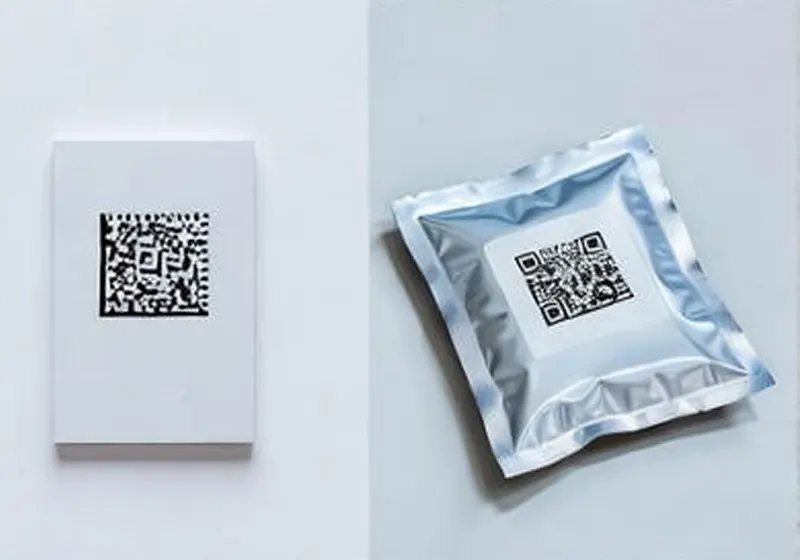
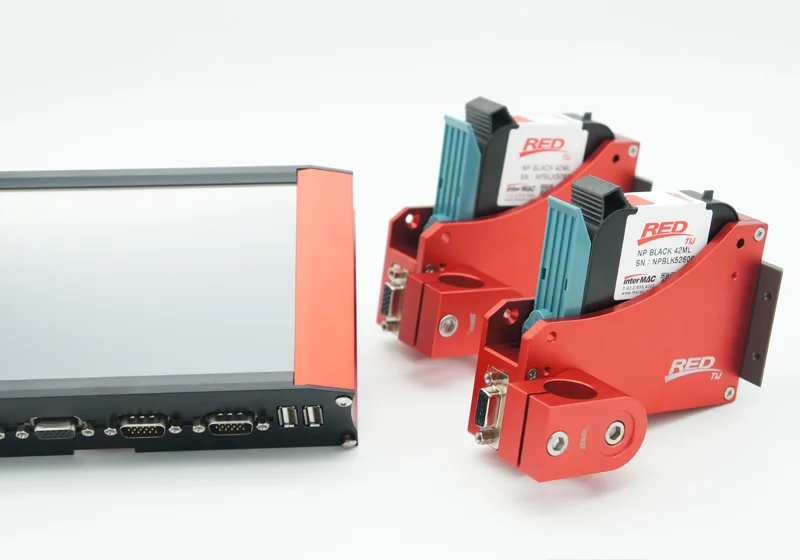
A QR code is a two-dimensional, machine-readable code that can store information in a comparatively small area. Unlike conventional one-dimensional barcodes, a QR code consists of an arrangement of square modules. This allows significantly more information to be displayed in a limited space.
In practice, QR codes are used, for example, to link to websites, digital product information, operating instructions, documentation or other digital content. In industrial applications, QR codes can also be part of comprehensive product identification and can, for example, be linked to an individual serial number or batch information.
```For many applications, it is not necessary or even practical to print QR codes on separate labels and then attach them to the product. An alternative is direct printing of the QR code onto the respective product or packaging.
Depending on the application, a QR code can be printed directly onto cardboard, paper, plastic, film, metal, wood, glass or other materials. The selection of a suitable printing process and ink is crucial. Industrial applications also require factors such as printing speed, adhesion, drying time, contrast and durability to be taken into account.
QR codes can be used for a wide range of information. They are particularly useful wherever physical products need to be connected with digital information.
QR code printing becomes particularly powerful when static content is combined with variable data. For example, an individual QR code with a unique serial number can be printed on each individual product.
Industrial production processes have different requirements than printing a QR code on paper. An industrial QR code printer often needs to operate reliably over extended periods and integrate into existing production processes. At the same time, print data must be processed quickly and adapted when products or batches change.
Modern industrial inkjet marking systems provide a flexible solution for this purpose. With Thermal Inkjet technology, abbreviated as TIJ, ink is applied to the material to be marked without physical contact. This makes it possible to mark both individual products and continuously moving packaging and production lines.
In addition to QR codes, TIJ systems are suitable for numerous other printing applications. These include texts, logos, dates, sequential numbers, batch numbers, barcodes and Data Matrix codes. Different contents can be combined in a single print layout.
Whether a QR code should be printed using a label printer or directly with an industrial marking system depends on the specific application. A label can be useful when complete product identification is required on a separate label anyway.
With direct printing, on the other hand, additional labeling is eliminated. The QR code is applied directly to the surface of the product, packaging or component. This can be particularly useful on production lines where variable information needs to be printed directly during the manufacturing or packaging process.
When selecting the appropriate system, factors such as the printing medium, print height, printing speed, required resolution, ink type and desired integration into the production process should therefore be taken into consideration.
An industrial QR code printer should be as easy as possible to integrate into existing production processes. Interfaces and suitable control options therefore play an important role. Depending on the production environment, sensors, packaging machines, scanners or other systems can be connected to the marking system.
Professional TIJ marking systems can perform printing tasks directly on the production line. This allows QR codes and other markings to be applied exactly where they are required in the production process.
A good QR code printer must do more than simply generate a code. What matters is that the printed code remains reliably readable under the respective production conditions. The printing system should therefore always be selected according to the specific application.
Sufficient print resolution is an important prerequisite for sharply defined QR codes. Especially with small codes, the individual modules must be clearly separated from one another. High print quality improves the conditions for scanners and mobile devices to reliably recognize the code.
When products are marked in an ongoing production process, the printer must be able to keep up with the existing process. The required printing speed depends, among other things, on the size of the QR code, the desired resolution and the speed of the conveyor belt or production line.
For industrial applications, the ability to print variable data is particularly important. A QR code can, for example, be combined with a sequential serial number, production date or batch number. This makes it possible to identify individual products and can improve traceability.
Not every ink is equally suitable for every surface. When selecting a QR code printer, the material to be printed should therefore also be taken into account. Paper and cardboard have different requirements than plastic, metal, glass or coated surfaces.
Depending on the application, water-based or solvent-based inks as well as special ink variants can be used. Important factors include adhesion, drying time, durability and the requirements for the subsequent use of the product.
 RED TIJ.1
The all-rounder in a compact format for print heights up to half an inch (approx. 12mm).
 RED TIJ.2
Simultaneous labeling with 2 print heads for print heights up to half an inch (approx. 12mm).
 RED TIJ.1P
Large format printing with a single 1 inch TIJ cartridge for double print height (approx. 25mm).
 RED TIJ.2P
Large format printing (25.4mm) with flexible dual-head system.
 RED TIJ 1" solvent-based
High-quality TIJ ink for all standard applications.
 RED TIJ ½" solvent-based
High-quality TIJ ink for all standard applications.
For industrial applications, RED Jet offers professional TIJ marking systems and mobile handheld printers for direct product identification. The systems can print not only text and variable data, but also QR codes, barcodes, Data Matrix codes, counters, dates and logos.
The stationary RED Jet TIJ systems are available in different configurations and, depending on the model, can be operated with one or more printheads. Different print heights and resolutions are available depending on the system.
For mobile applications, RED Jet also offers compact TIJ handheld printers. QR codes, barcodes, texts, sequential numbers, dates, graphics and logos can be created and printed directly on the device.
A range of industrial inks is also available for different materials and application requirements. Depending on the application, water-based or solvent-based inks can be used.
This enables RED Jet to provide solutions both for stationary QR code printing on production lines and for mobile marking with a handheld printer. The appropriate solution depends primarily on the printing material, required print height, speed, location of use and type of information to be printed.
These pages are provided by Geotechtronics GmbH, the partner of RED Jet ( Intermac Co. Ltd., KOREA) for the German-speaking area of Europe. We are happy to help you.