Production Line Printers
Efficient and automated product marking directly within ongoing manufacturing or packaging processes on the production line.



Efficient and automated product marking directly within ongoing manufacturing or packaging processes on the production line.
Production Line Printers are an important part of modern manufacturing and packaging processes. They make it possible to apply important information directly to products, packaging, components and materials during ongoing production. This can include texts, serial numbers, batch numbers, expiration dates, barcodes, QR codes, logos or other variable data.
Reliable product marking is essential in many industries. Products must be clearly identifiable, production and batch data must remain traceable, and machine-readable information must be available for logistics, quality assurance and inventory management. Production Line Printers are therefore integrated directly into automated manufacturing and packaging systems and normally operate continuously as part of the production process.
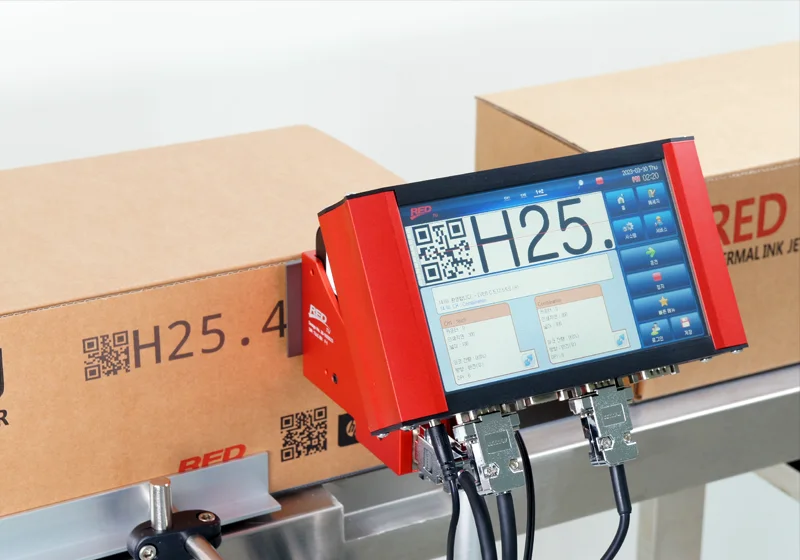
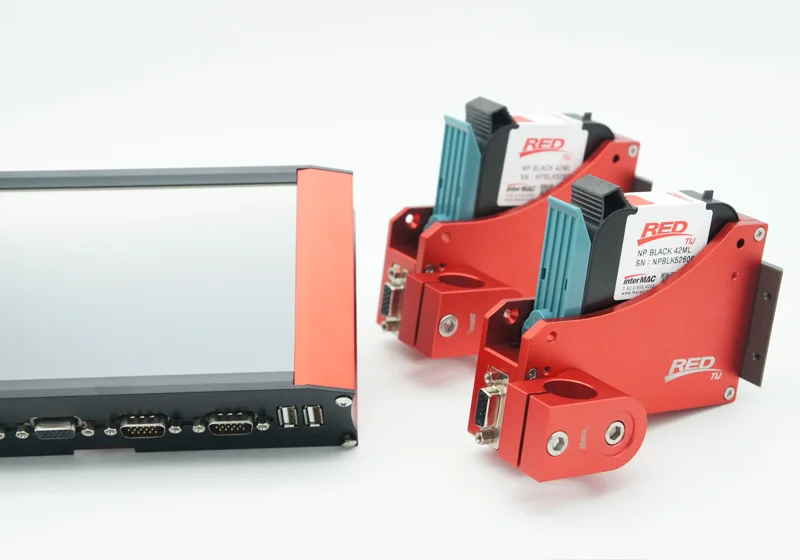
Production Line Printers are printing systems designed specifically for use directly in automated production lines. Unlike conventional office or label printers, they apply the required marking directly to the product, packaging or other substrates.
Printing takes place during the ongoing production process. For example, products are transported on a conveyor belt and pass the print head. Depending on the application, static information or continuously changing data can be printed. Modern systems can be connected to production machinery, controllers, sensors and higher-level software solutions.
A Production Line Printer therefore needs to provide more than good print quality. Reliable operation, high availability and easy integration into existing production processes are equally important.
The requirements for industrial product marking vary considerably. Depending on the product and industry, a wide range of different information may be required. Production Line Printers can apply, among other things, the following content:
Direct printing offers particular advantages when variable information is required. The relevant print data can be automatically transferred to the marking system and updated during production. This makes it possible, for example, to mark different batches or serial numbers without manually replacing print templates.
For many industrial applications, it makes sense to integrate product marking directly into the production line. The product can then be marked with the required information during manufacturing or packaging. An additional manual work step can therefore be eliminated.
With direct marking, the print information is applied directly to the surface of the respective product or material. Depending on the substrate and the required print quality, different printing technologies can be used.
The selection of the appropriate system depends, among other things, on the surface, production speed, required print image, position of the print head and environmental conditions.
Materials such as plastic, paper, cardboard, metal, wood or various composite materials can be printed. Porous and non-porous surfaces also place different requirements on ink, printing technology and print quality.
When selecting a system, the required print resolution should therefore not be the only consideration. What matters most is whether the printing technology can reliably operate with the respective material and production conditions over the long term.
Machine-readable codes are becoming increasingly important in modern production and logistics processes. Barcode Printers and systems for direct QR code printing can apply information for identification and traceability directly to products or packaging.
Barcodes can contain article numbers, batch information or other product-related data, for example. QR codes also provide the option of storing larger amounts of data in a relatively small area.
Sufficient print quality is essential for reliable automatic code reading. Edges must be clearly defined and the code must provide sufficient contrast. Production Line Printers must therefore deliver consistent print results even during continuous production.
A modern Production Line Printer does not normally operate as a standalone system. It is integrated into the existing production process and can communicate with PLCs, conveyor belts, sensors or other machines, for example.
Print data can be transferred automatically via appropriate interfaces. This allows the system, for example, to identify which product is currently being manufactured and which marking needs to be applied.
When products or production orders change, the print template can be adjusted automatically. This reduces manual intervention and helps prevent marking errors during ongoing production.
 RED TIJ.1
The all-rounder in a compact format for print heights up to half an inch (approx. 12mm).
 RED TIJ.2
Simultaneous labeling with 2 print heads for print heights up to half an inch (approx. 12mm).
 RED TIJ.1P
Large format printing with a single 1 inch TIJ cartridge for double print height (approx. 25mm).
 RED TIJ.2P
Large format printing (25.4mm) with flexible dual-head system.
 RED TIJ 1" solvent-based
High-quality TIJ ink for all standard applications.
 RED TIJ ½" solvent-based
High-quality TIJ ink for all standard applications.
RED Jet offers solutions for industrial product marking and direct printing. The systems can be used for different materials and applications and integrated into existing production processes.
Whether texts, numbers, batch numbers, barcodes, QR codes or other variable information are required, reliable marking depends on the right combination of printing technology, ink, print resolution and integration into the production line.
If you are looking for a Production Line Printer for your application, the requirements regarding the product, material, print image and production speed should be the main considerations. RED Jet supports you in selecting a suitable solution for industrial product marking and direct printing.
Production Line Printers enable efficient and automated marking directly during ongoing manufacturing or packaging processes. They can print texts, data, barcodes, QR codes and other information directly onto products and packaging.
When selecting the right system, the substrate, production speed, required print quality, type of marking and integration into the existing production system are particularly important. A carefully selected printing solution helps automate marking processes, clearly identify products and improve traceability throughout modern production and logistics processes.
These pages are provided by Geotechtronics GmbH, the partner of RED Jet ( Intermac Co. Ltd., KOREA) for the German-speaking area of Europe. We are happy to help you.